Even cats who do not fight can feel tension if they must pass one another to reach food, a litter tray, or a resting place. The number of items matters, but so does where they are located.
Observe how the cats move through the home instead of assuming that living together means they want to be close.
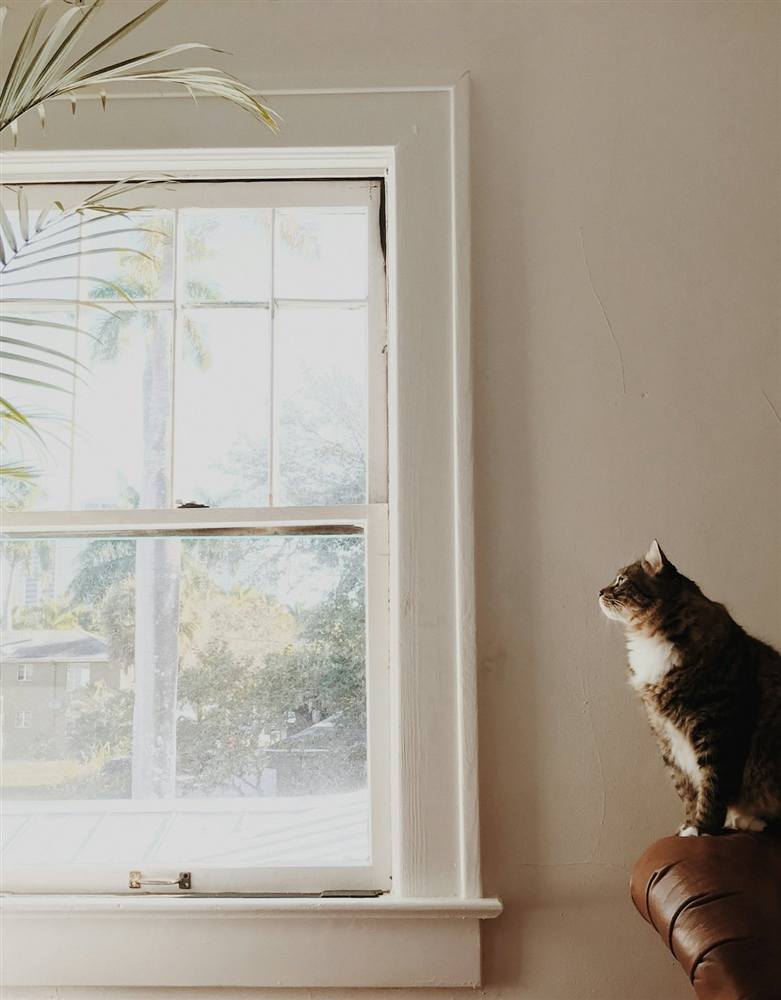
Separate important resources
Place food, water, litter trays, beds, and scratching surfaces in different parts of the home instead of clustering everything together. Avoid narrow or noisy areas where one cat could block another’s path.
Give each cat access to their own bowls and resting places. If a professional gives you different advice for your home, follow the individual plan.
Add alternate routes
Hiding places and elevated spots let cats pass without approaching each other. Check that a cat can leave a room in more than one way and that a timid cat cannot be trapped between another cat and a doorway.
Place litter trays where cats can see another animal approaching and leave calmly. Keep food away from the tray and from places where another cat can guard it.
Check how the layout is working
Watch for waiting at doorways, blocked routes, avoided rooms, or a change in the path a cat takes to reach resources. These observations can show what needs moving.
Change the layout gradually while keeping familiar items accessible. If tension or toileting changes continue, discuss it with a veterinarian: the cause may involve health as well as the environment.
SMALL STEPS OF CARE
What you can do
- Separate bowls, trays, beds, and scratching surfaces
- Avoid narrow paths and noisy places
- Provide alternate routes and elevated hiding places
- Watch for blocked paths and waiting
- Move items gradually and review the result
What to avoid
- Putting every bowl and litter tray in one place
- Assuming no fighting means every cat is comfortable
- Blocking the only route to an important resource
CHECKING IS CARING
Sources and further reading
Sources checked November 2, 2026. The editorial team prepared this guide from public recommendations; it has not received individual veterinary review.
How we prepare our guides →Every cat has their own pace. Your attention makes a difference.
← Back to the guides