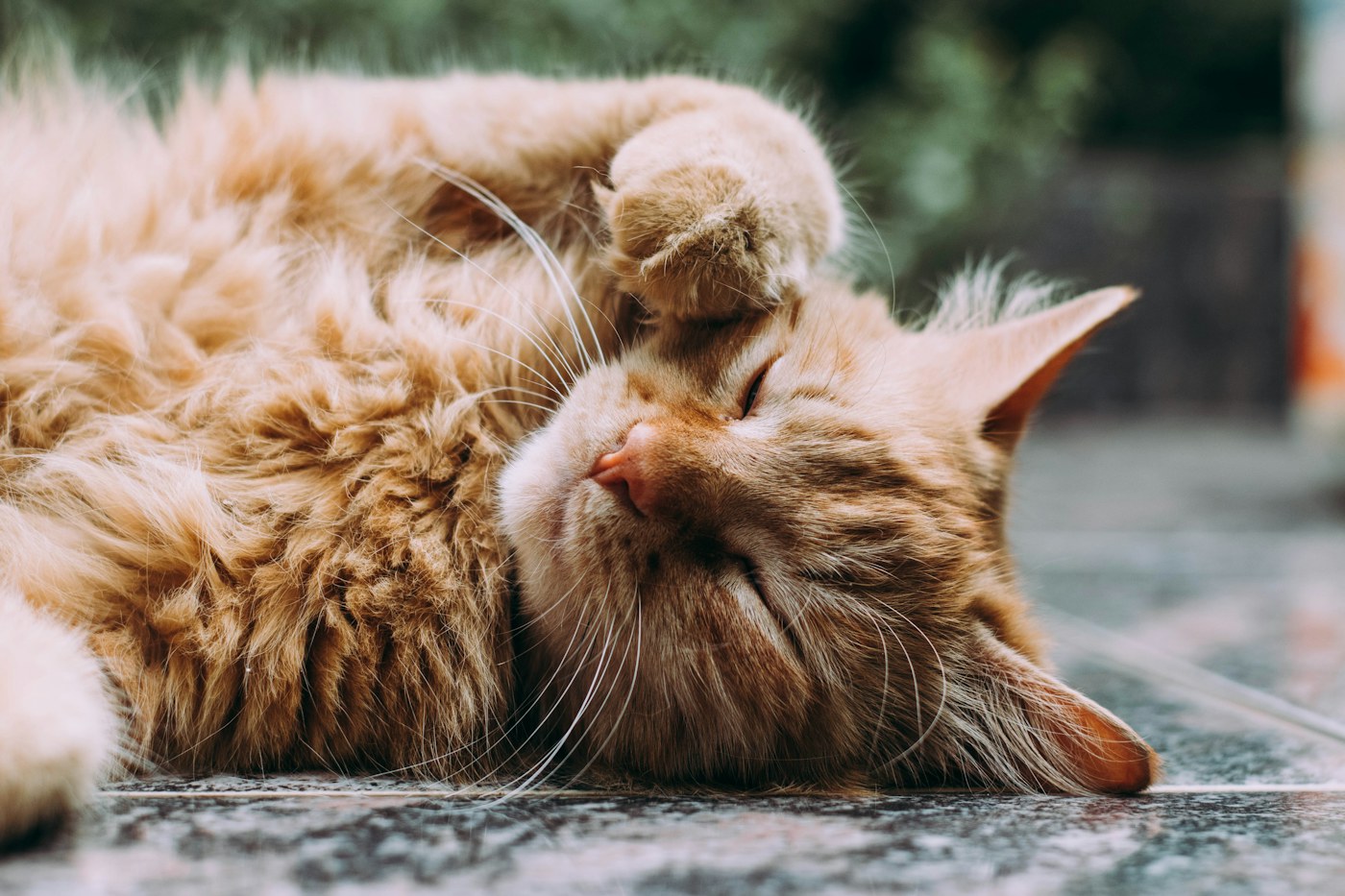
Cats cannot explain in words whether they enjoy an interaction. Instead of one expressive ‘face’, they use a combination of posture, tail, ears, eyes, whiskers, movement and sound. One gesture is not a reliable answer: a cat showing their belly may be relaxed, but that is not necessarily an invitation to touch it.
A useful habit is to watch from a little distance, then let the cat choose whether to approach. If signals conflict or change, take the more cautious approach and pause. This gives the cat less need to defend their boundaries by hissing or swatting.
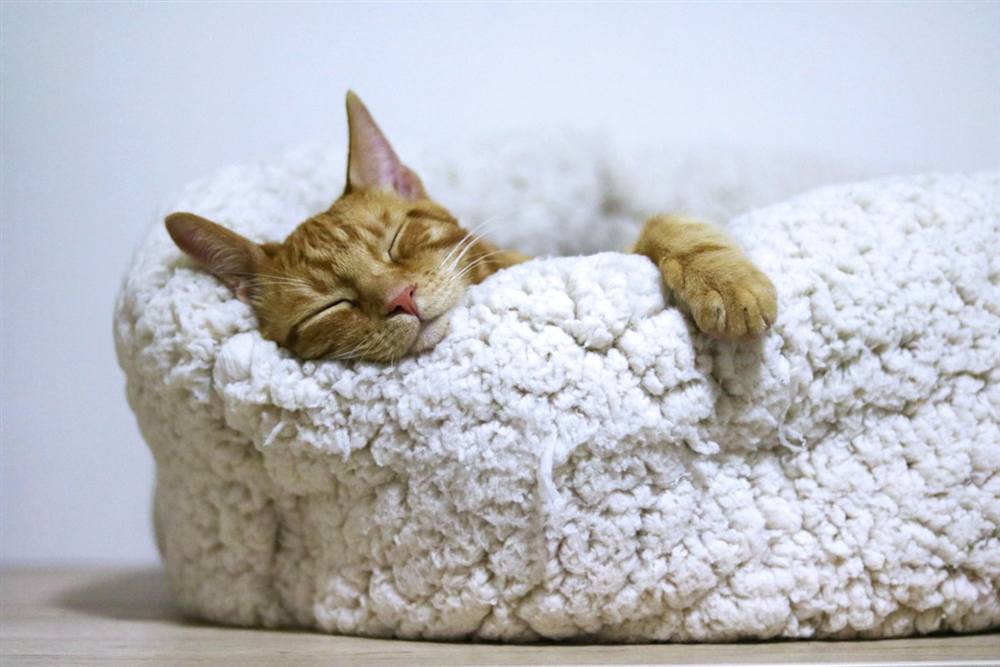
Look for several clues together
A relaxed cat often has a loose posture, ears forward or neutral, and softly narrowed eyes. A raised tail when approaching may be a friendly greeting. But consider the whole body and situation: after a loud noise, even a familiar cat may look wary.
Tension may show as flattened or sideways ears, wide eyes, a sharply moving tail, crouching, or trying to leave, hide or get up high. Hissing and swatting often mean a cat needs more distance. These are signals of how they feel, not a label of a ‘bad temperament’.
- Read ears, eyes, tail, muscles and movement together.
- Notice what happened just before the posture changed.
- Compare the cat with their usual behaviour, not an online picture.
Offer contact instead of insisting on it
Sit sideways at a comfortable distance and avoid leaning over the cat. You can calmly offer a still hand without touching them. If the cat approaches and sniffs, that still does not mean they want a long petting session. If they remain relaxed, try a brief touch on the cheek or head, then pause. Continue only if they choose to come closer.
A slow blink and looking away can make your presence less intense. If the cat turns away, moves off, stiffens or ends the interaction, let them go. Trust grows through predictable encounters where a refusal is respected.
When observation is not enough
Posture can suggest that a cat may be comfortable or worried, but it cannot establish the cause of a behaviour. If your cat suddenly avoids touch, hides or becomes unusually irritable, do not test them by holding them still. Note when and in what circumstances the change happens, and discuss it with a vet.
SMALL STEPS OF CARE
What you can do
- Watch your cat before reaching out.
- Leave a clear route to move away or reach a safe place.
- Pause after a brief touch and wait for your cat to take the lead.
- Stop if your cat becomes tense, moves away or gives a warning signal.
- If familiar behaviour changes suddenly, note the circumstances and contact a vet.
What to avoid
- Treating one gesture, such as showing the belly, as an invitation to touch.
- Continuing to pet a cat who has turned away or tried to leave.
- Punishing a hiss or growl instead of giving the cat safe distance.
CHECKING IS CARING
Sources and further reading
Sources checked November 2, 2026. The editorial team prepared this guide from public recommendations; it has not received individual veterinary review.
How we prepare our guides →Every cat has their own pace. Your attention makes a difference.
← Back to the guides