Many cats sleep and rest at different times through the day. People often quote around 12–18 hours a day, but that is a guide, not a requirement for every cat: age, activity and familiar surroundings all affect routine. A cat may look asleep but still react quickly to a sound.
Morning and evening activity also reflects the natural rhythm of cats: many become more alert at dawn and dusk. This can be inconvenient for people, but scolding will not change it. Instead, make time for safe play and a predictable routine without depriving your cat of rest.
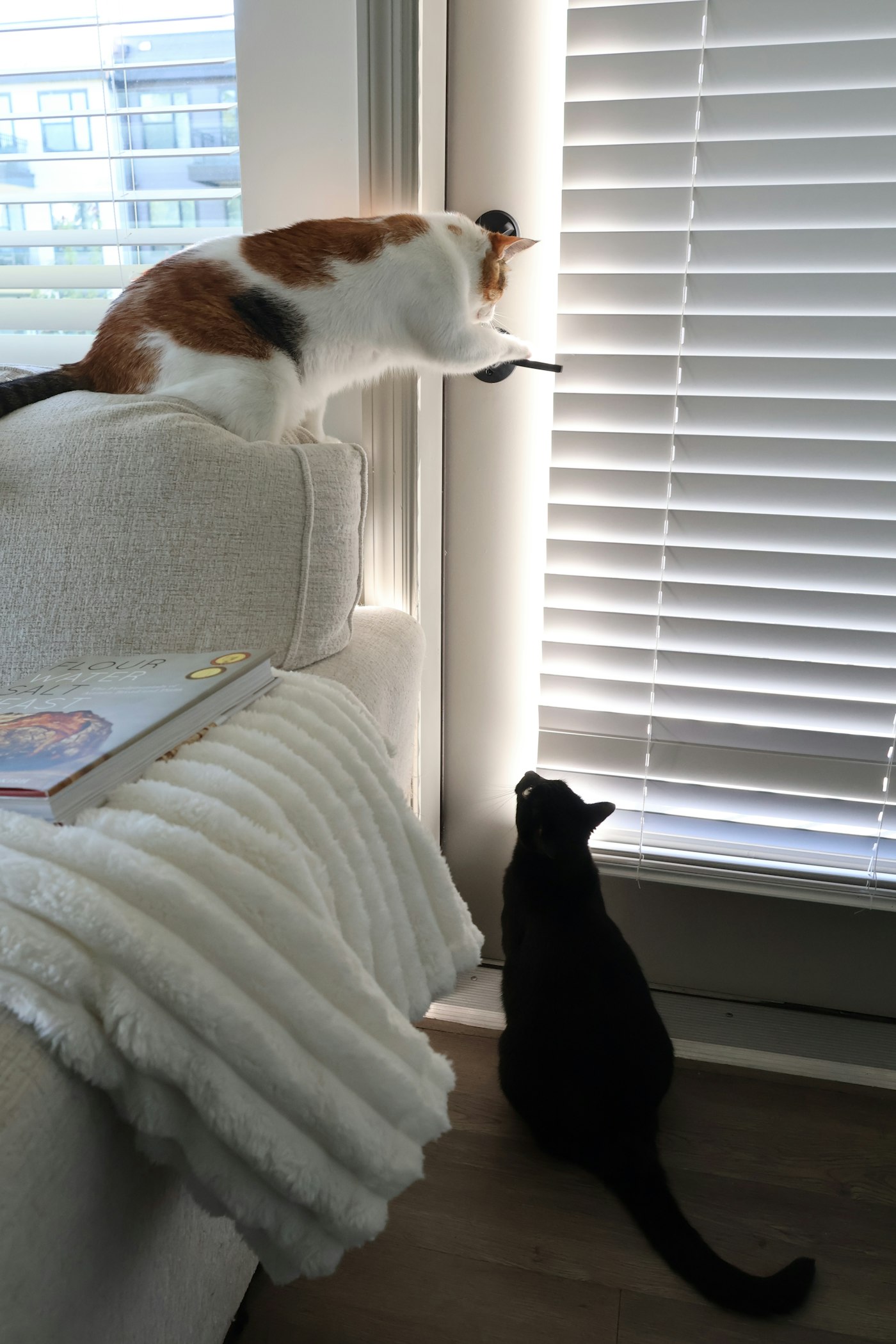
Sleep is not one long night-time stretch
Cats usually alternate short periods of dozing and wakefulness. They may prefer warm, quiet places, hiding spots or elevated resting places, and their favourite place may change. Offer several safe options so your cat can choose based on temperature, noise and mood.
Do not wake your cat for a photo or play, or keep them awake all day so they will ‘sleep through the night’. Disrupted sleep may cause stress, and a cat woken suddenly may react defensively before they are fully alert. If you have children, make the resting area a no-disturb zone.
- Provide a quiet sleeping area where your cat will not be disturbed.
- Offer a choice of beds or safe hiding places.
- Let your cat wake naturally and stretch before becoming active.
Guide morning play into a calmer routine
Short play sessions during the day can give your cat an outlet for chasing and catching a toy. Choose a suitable interactive toy and put it away after play if it has long strings or parts that are not safe to leave out. Do not deprive your cat of sleep in an attempt to tire them out at night.
If your cat wakes you at dawn, notice what is happening: they may want play, familiar attention or the routine they used to get when you woke. Make changes gradually and keep things predictable without scolding or frightening your cat.
Watch for changes, not just the number of hours
Long naps alone do not establish a problem. Compare your cat’s sleep with their own usual rhythm. If they suddenly sleep much more, stop playing or hide, note when the change began and consult a vet. Do not try to identify the cause from a sleep schedule at home.

SMALL STEPS OF CARE
What you can do
- Observe your cat’s individual rhythm over several days.
- Provide a quiet resting place and avoid waking them unnecessarily.
- Plan short play sessions and let your cat choose when to stop.
- Keep meals and evening activities predictable.
- Ask a vet about a sudden, persistent change in behaviour.
What to avoid
- Treating a suggested number of sleep hours as a rule for every cat.
- Keeping a cat awake in the day to prevent night-time activity.
- Waking and handling a cat while they are asleep.
CHECKING IS CARING
Sources and further reading
Sources checked November 2, 2026. The editorial team prepared this guide from public recommendations; it has not received individual veterinary review.
How we prepare our guides →Every cat has their own pace. Your attention makes a difference.
← Back to the guides