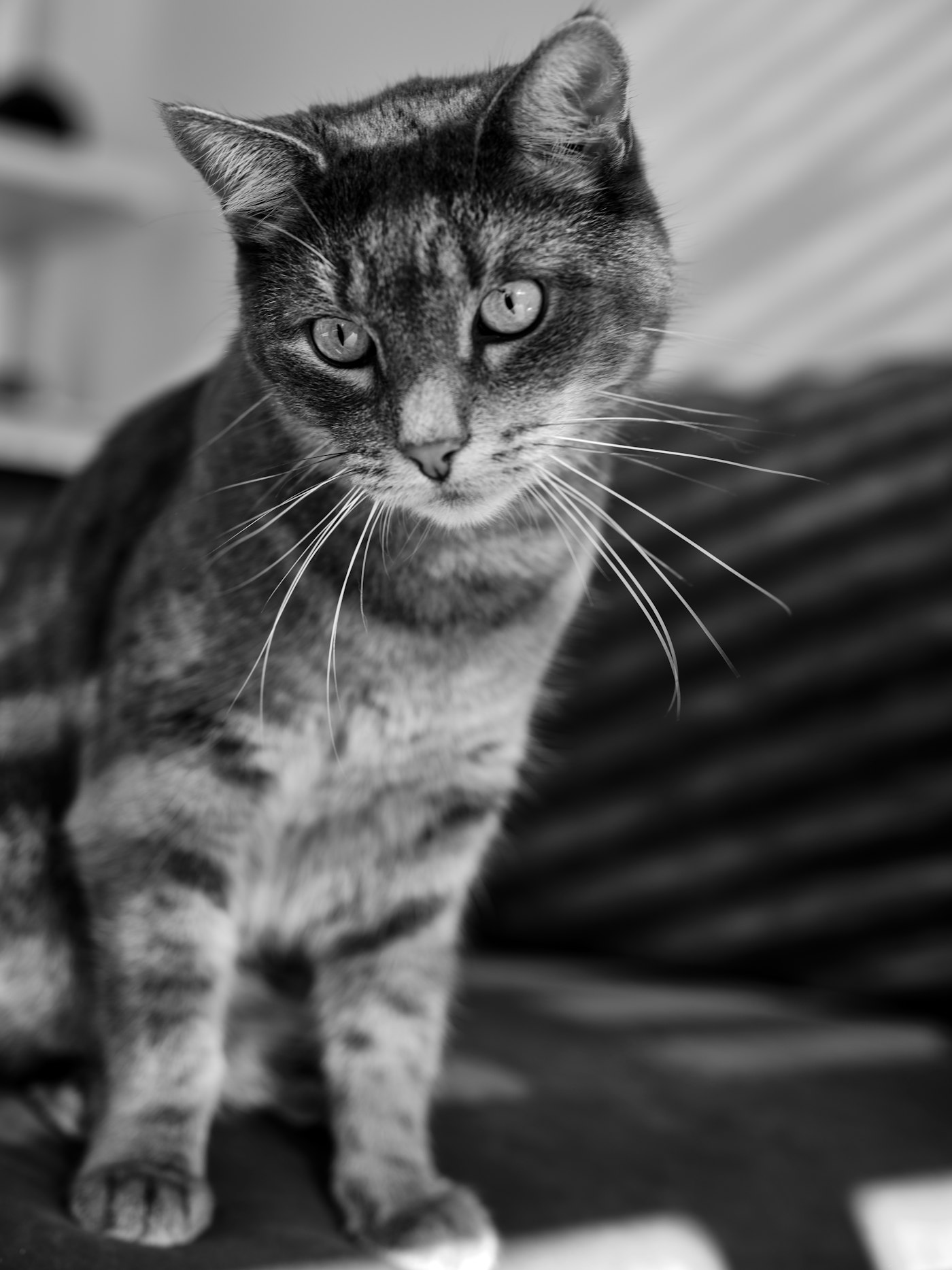
Cats experience the world differently from people. They use not only visible objects but also smells, sounds, air movement and touch. The whiskers on a cat’s face are specialised sensitive hairs called vibrissae; they help detect nearby objects and air currents.
Whiskers are not a ruler that precisely measures every opening: cats use several kinds of information, and whether they pass through a gap depends on their whole body and the situation. Observe your cat rather than changing the home based on a popular myth about whiskers.
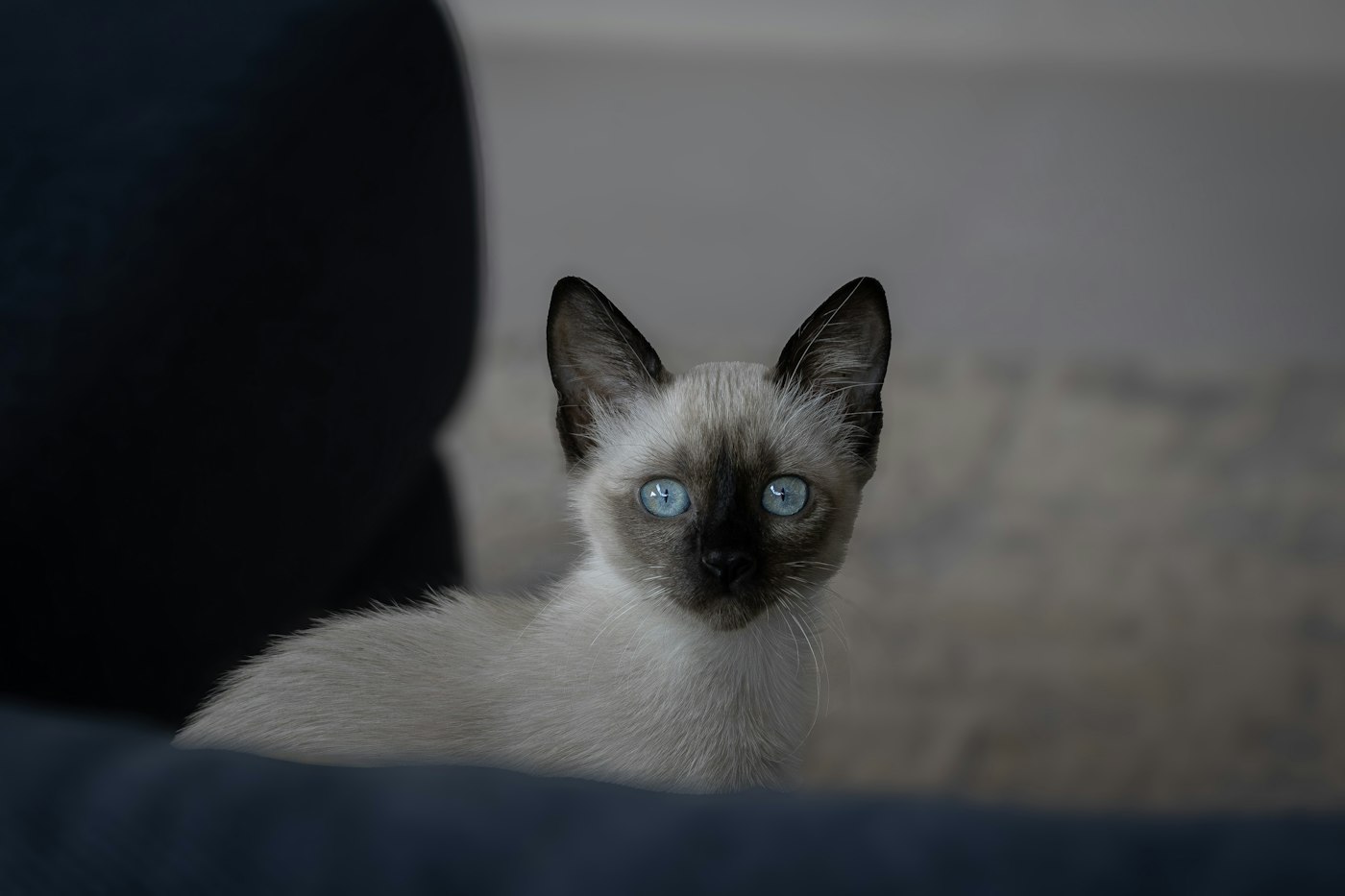
Whiskers help sense nearby space
Vibrissae grow not only beside the nose, but also above the eyes, on the cheeks and chin; some cats also have sensitive hairs on their front legs. They respond to touch and air movement. Whiskers can point forward or back, so their position, together with ears and posture, can add clues about a cat’s mood.
Because they are sensitive, do not trim, pluck or pull whiskers. If your cat dislikes touching the sides of a bowl, try a wide, shallow dish and see whether that changes their behaviour. Do not infer an illness from eating habits or whisker movement alone.
- Do not touch or trim vibrissae unless a vet directs you to.
- Leave enough room around bowls for your cat to approach comfortably.
- Read whisker position together with other signals.
Smell and hearing carry information too
A cat’s sense of smell helps them recognise familiar places and animals through scent marks. Rubbing the cheek on an object leaves an individual scent; scratching can leave signals from the paw pads as well. This is one reason why suddenly rearranging or deeply cleaning familiar places may change how the territory feels to a cat.
Mobile ears help cats notice sounds and where they come from. A noise that seems quiet to people may still attract a cat’s attention. Do not test their hearing with sudden loud noises or play sounds at high volume nearby; ordinary, calm observation is enough.
Make a home your cat can explore
Let your cat sniff a safe new object from a distance and move away if it feels unfamiliar. Do not bring it up to their face or hold them near it. Familiar hiding places, predictable routes and several quiet spots help your cat explore without pressure.
SMALL STEPS OF CARE
What you can do
- Let your cat approach a new object on their own.
- Do not trim or pull vibrissae.
- Check that bowls are easy for your cat to approach and use.
- Avoid sudden loud sounds and strong smells near a hiding place.
- Keep familiar locations while your cat adjusts to changes.
What to avoid
- Treating whiskers as an exact gauge for gap width.
- Touching or trimming vibrissae for appearance.
- Drawing a medical conclusion from one sensory signal.
CHECKING IS CARING
Sources and further reading
Sources checked November 2, 2026. The editorial team prepared this guide from public recommendations; it has not received individual veterinary review.
How we prepare our guides →Every cat has their own pace. Your attention makes a difference.
← Back to the guides