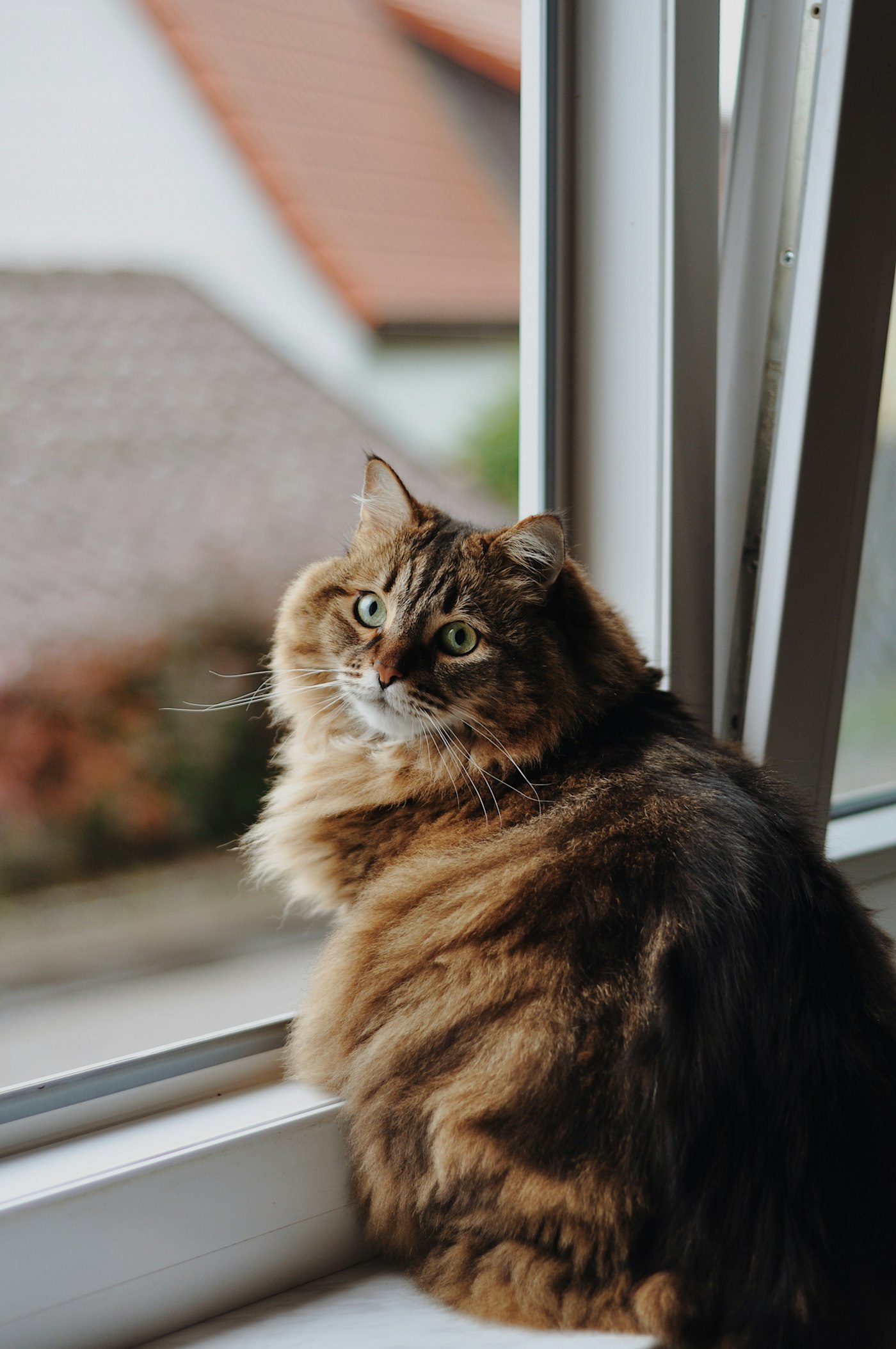
Siberians are recognizable by their sturdy build, bushy tail, and dense, medium-long coat with a thick undercoat. They come in many colors, and adults mature gradually; an individual cat may differ from the show standard and from expectations about temperament.
Appearance and individuality
The breed’s traditional triple coat describes its appearance; it does not mean the coat takes care of itself. Density and texture can change with the season and age. Notice how the cat responds to touch and brushing: long fur needs regular care, while tolerance for grooming varies by individual.
Breed descriptions may call Siberians sociable or clever, but those are not promises about behavior. Ask how this particular cat seeks contact, plays, responds to strangers, and rests. Provide a quiet hiding place, sturdy perches, scratching posts, and daily play that can end when the cat has had enough.
Coat care and a suitable home
Introduce brushing through short, calm sessions. Check behind the ears, under the legs, and around the belly, where mats can form. Inspect the coat more often during shedding. Do not pull at a tight mat or try to cut it out yourself; ask a veterinarian or qualified groomer to assess safe care. Keep eyes and ears clean and provide a familiar scratching surface.
A large, active cat needs sturdy surfaces, safe routes up and down, and a place to retreat. Secure windows and balconies with reliable screens. Choose play and climbing equipment for this cat’s age, weight, and comfort rather than its breed’s size alone.
Health and responsible introductions
Siberians, like other breeds, can have individual health risks; hypertrophic cardiomyopathy is reported more often in several breeds, including Siberians. That does not mean an individual cat has the condition. Before bringing a cat home, request available veterinary records, ask what heart and inherited-condition screening the parents received, and discuss its relevance with an independent veterinarian. Neither a test nor a pedigree replaces an examination.
When adopting from a shelter, ask about known health history, response to brushing, usual activity, and comfort around people or animals. If you choose a breeder, ask to see the living conditions and records, and take time to discuss them without pressure. Siberian appearance does not guarantee low allergen exposure: people vary, so meeting an individual cat may offer limited information about tolerance but cannot predict future reactions.
SMALL STEPS OF CARE
What you can do
- Ask about the individual cat’s habits and response to brushing
- Prepare sturdy places for play, rest, and hiding
- Request medical records and available screening results for the parents
- Discuss breed and individual risks with a veterinarian
- Plan for coat care and its costs
What to avoid
- Assuming a long coat is low-maintenance or entirely self-cleaning
- Expecting guaranteed temperament, health, or freedom from allergies
- Trying to force out mats or cut them at home
CHECKING IS CARING
Sources and further reading
Sources checked November 2, 2026. The editorial team prepared this guide from public recommendations; it has not received individual veterinary review.
How we prepare our guides →Every cat has their own pace. Your attention makes a difference.
← Back to the guides