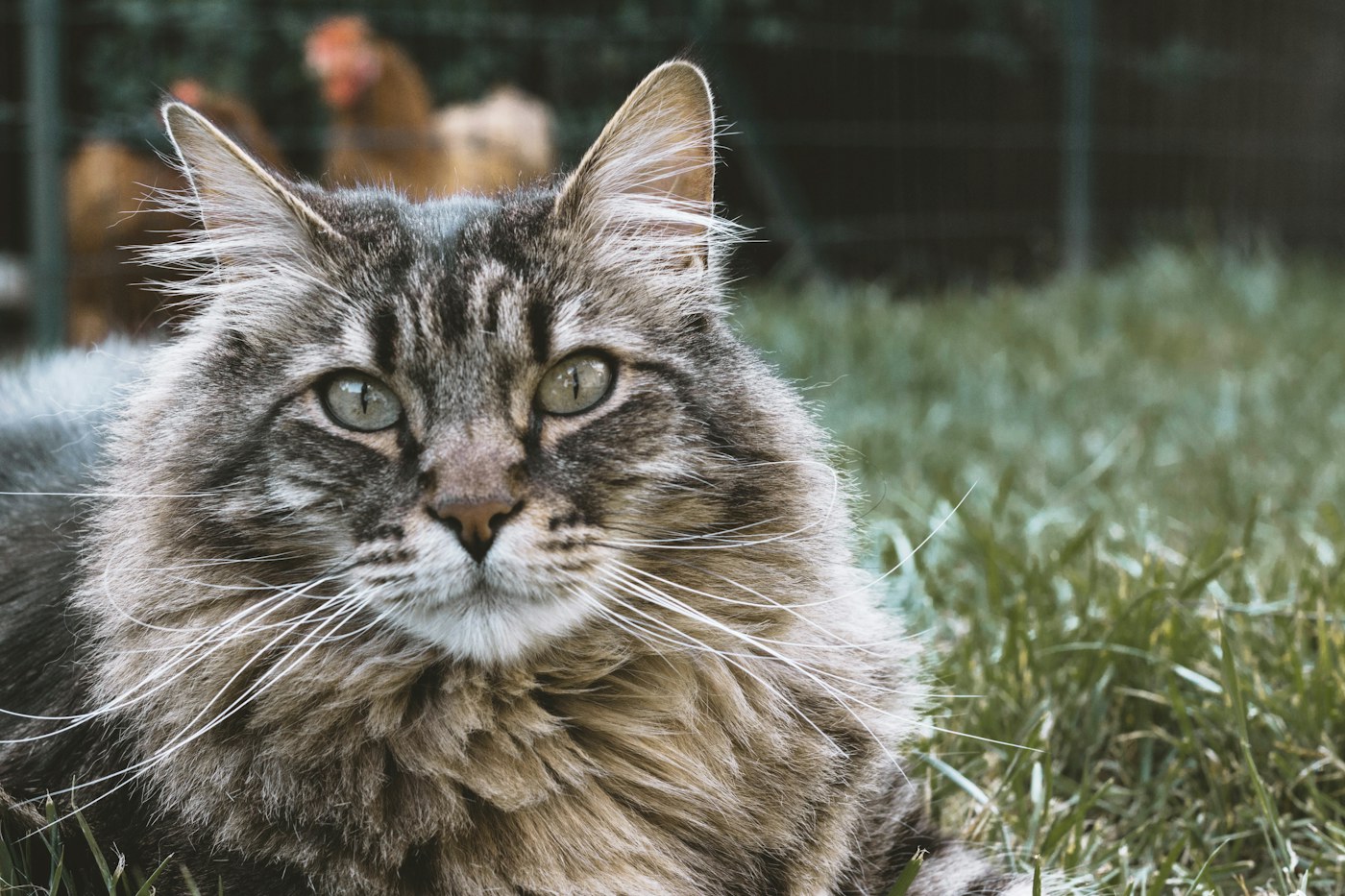
The Maine Coon is known for a large build, long tail, large ears and a semi-long coat. Size and breed descriptions do not predict personality: get to know the individual cat and their habits.
A home that fits
Choose a stable scratching post, sturdy shelves, a roomy litter tray and a carrier in which the cat can fit comfortably. Offer play, resting and observation places, and a chance to withdraw from interaction. Secure high surfaces and adapt the space to the cat’s age and mobility.
Long coat
Comb the coat gently and regularly, paying attention to areas prone to tangles. Introduce grooming gradually and stop if the cat is sore or frightened. Discuss tight mats with a veterinarian or groomer rather than cutting close to the skin yourself.
Health and check-ups
Discuss the heart and suitable examinations with a veterinarian: Maine Coons are among breeds with a higher prevalence of hypertrophic cardiomyopathy. If parental screening results are available, ask the veterinarian to explain their limitations. Also ask about nutrition, joints and changes in movement; size alone does not establish disease.
A responsible decision
Before deciding, ask about living conditions and request available veterinary records and parental screening results, if they exist. Discuss their meaning with an independent veterinarian: a test cannot guarantee freedom from disease. At a shelter, ask about the individual cat’s habits and needs; the availability of pedigree cats cannot be promised. Consider your time, costs and a care plan for absences. Choose responsible care rather than appearance at any cost.
Before the cat arrives, agree with everyone at home who will feed the cat, clean the litter tray and contact the veterinarian. Consider how care will be arranged during travel or a caregiver’s illness. If the animal’s needs are not yet known, allow time for a calm introduction and ask the current carer questions.
SMALL STEPS OF CARE
What you can do
- Learn the individual cat’s needs
- Prepare safe space and play
- Discuss care and screening with a veterinarian
- Check available records and living conditions
What to avoid
- Treating a breed description as a guarantee of personality or health
- Ignoring discomfort for appearance
- Buying or adopting without a care plan
CHECKING IS CARING
Sources and further reading
Sources checked November 2, 2026. The editorial team prepared this guide from public recommendations; it has not received individual veterinary review.
How we prepare our guides →Every cat has their own pace. Your attention makes a difference.
← Back to the guides