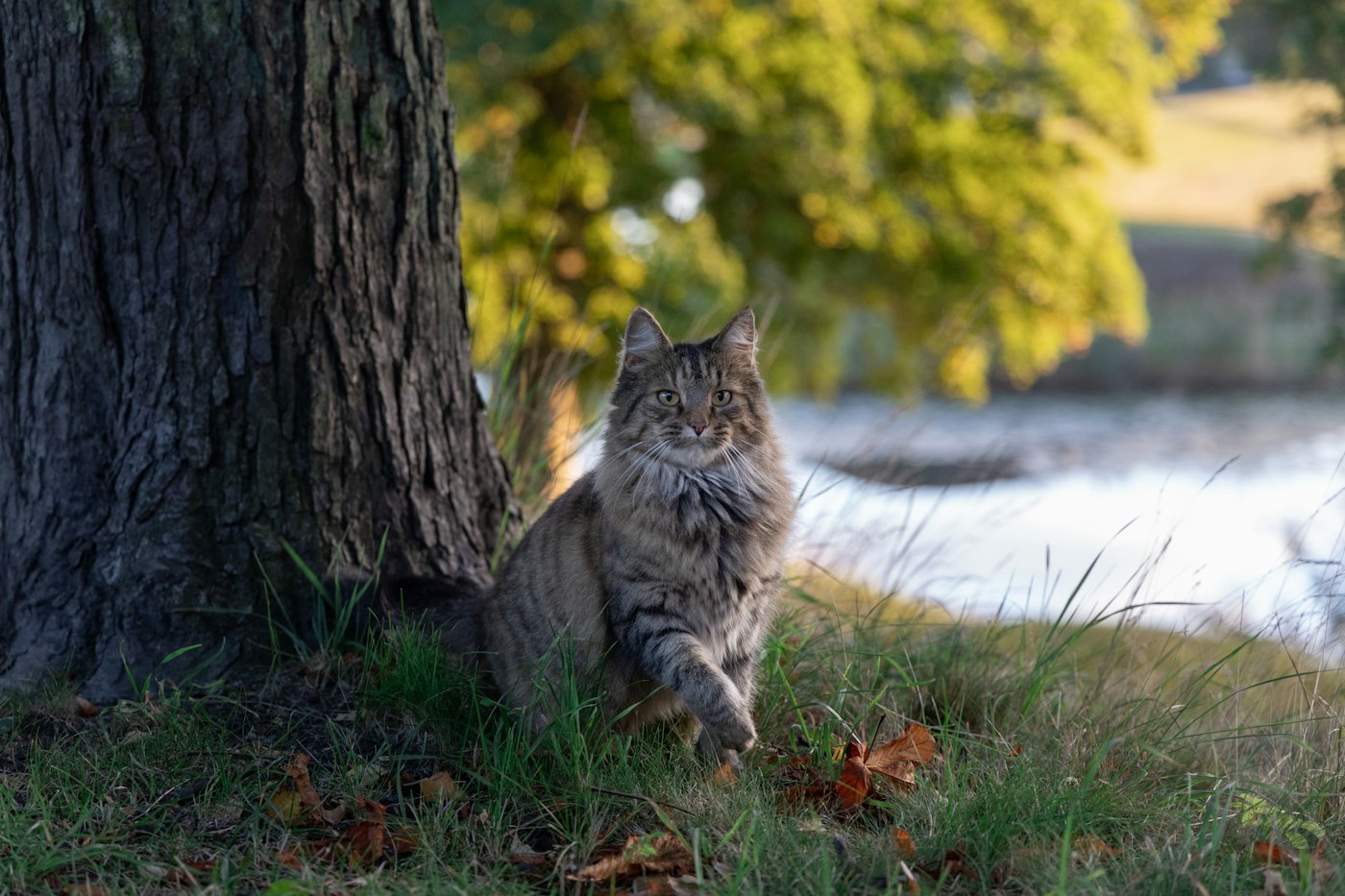
The Norwegian Forest Cat is a large, sturdy breed with a dense, medium-long coat and bushy tail. The winter coat looks especially full, but individual cats vary in size, activity, and comfort around people. A breed standard describes appearance, not a reliable forecast of personality.
Temperament and space
Norwegian Forest Cats are often described as playful and adaptable; that generalization cannot replace meeting an individual cat. Find out whether this cat enjoys height, energetic play, quiet company, or more time in a hiding place. Provide a sturdy scratching post, accessible shelves, and resting spots. Elevated routes should be stable and offer safe ways back down.
Daily play can engage a curious cat; alternate wand toys, food puzzles, and calm exploration. Put away small objects and secure tilted windows and balconies. If children or other pets live in the home, introduce them gradually and let the cat leave when it chooses.
Seasonal coat and everyday care
TICA notes that the dense winter coat usually does not require daily brushing, though extra checks and brushing may help during the spring coat change. Set the routine according to the coat’s condition and the cat’s response. Check the undercoat gently and look in areas where fur rubs together. If painful mats appear, do not pull or use scissors near the skin; ask a veterinarian or experienced groomer for help.
Check claws, ears, and teeth regularly, and discuss care with a veterinarian, especially if the cat is not used to handling. A large, fluffy appearance should not interfere with free movement or prompt diet restriction without professional advice.
Health and choosing a cat
TICA lists hypertrophic cardiomyopathy, pyruvate kinase deficiency, and glycogen storage disease type IV among conditions reported in the breed. Genetic tests are available for some conditions; echocardiographic heart screening may also be discussed. Ask what checks have been done, request copies of results, and review them with a veterinarian. Screening reduces uncertainty but cannot guarantee future health.
At a shelter, ask about observed health, habits, and response to brushing. A responsible breeder should be able to share records and discuss the parents’ health without rushing you or handing over a cat without a clear care history. Breed alone does not determine compatibility: match the individual cat’s needs with your time, space, and ability to provide regular grooming.
SMALL STEPS OF CARE
What you can do
- Ask about the cat’s habits, activity level, and comfort with height
- Prepare secure shelves, a hiding place, and a safe scratching post
- Check the coat more often during seasonal shedding
- Request available genetic and heart-screening results
- Agree on an individual preventive-care plan with a veterinarian
What to avoid
- Assuming a long coat never needs brushing
- Treating breed-associated risks as a diagnosis for an individual cat
- Choosing by size and appearance without considering daily needs
CHECKING IS CARING
Sources and further reading
Sources checked November 2, 2026. The editorial team prepared this guide from public recommendations; it has not received individual veterinary review.
- TICA: Norwegian Forest ↗
- Cornell: Hypertrophic cardiomyopathy ↗
- Cats Protection: Getting a pedigree cat ↗
Every cat has their own pace. Your attention makes a difference.
← Back to the guides