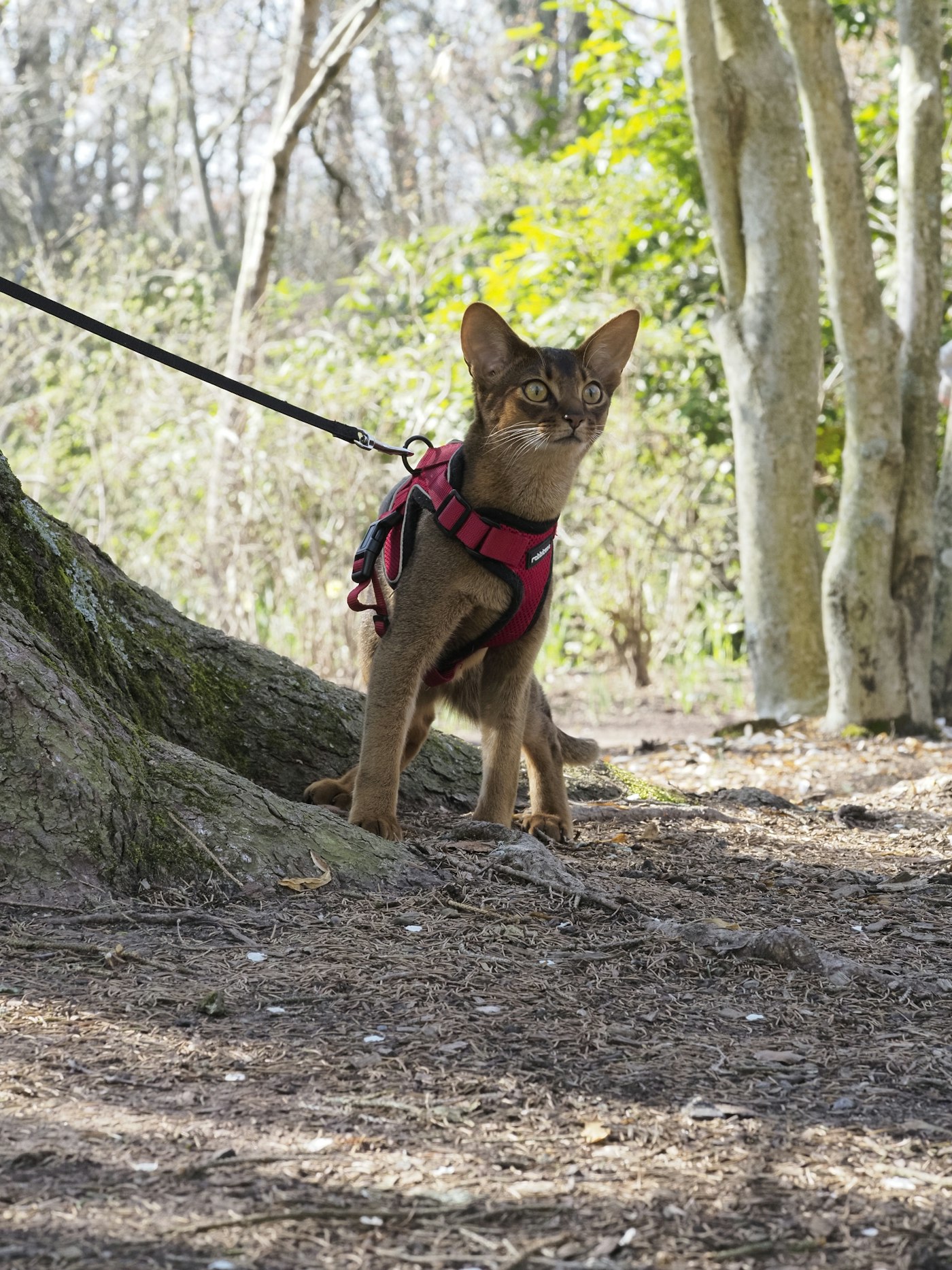
The Abyssinian has a short ticked coat, with bands of different shades along individual hairs. Its lean, muscular body and alert expression give an impression of readiness to explore. Breed descriptions often note high activity, but each cat’s energy level and way of relating to people are individual.
Activities and environment
An Abyssinian may suit a home where adults can provide daily play and safely enrich the environment. Offer stable shelves, scratching posts, search toys, and a protected place to watch from a window. Alternate short active games with rest. Put away small objects and secure wires and high-risk areas; do not use punishment to try to stop boredom-related behavior.
Ask how the cat behaves when alone, with visitors, and around other pets. The breed may be described as curious or energetic, but that does not guarantee the same sociability in every cat or make them a fit for every home. Each introduction needs a safe distance and an option to leave.
Coat and routine care
Short fur is usually straightforward to maintain: gently brush loose hairs now and then and check the skin. As the cat becomes comfortable, add calm checks of the ears, claws, and teeth. TICA describes the coat as low-shedding, but shedding and tolerance of brushing vary. Use tools suitable for the cat and pause if they move away.
Ask a veterinarian about preventive care for this individual and watch for changes in activity, gait, vision, or familiar behavior. Do not explain new symptoms away as part of the breed; noticeable changes need an individual assessment by a professional.
Inherited risks and responsible choice
TICA lists pyruvate kinase deficiency, progressive retinal atrophy, patellar luxation, and renal amyloidosis among possible breed-associated risks. Genetic testing is available for some conditions; it may not be available for others. Ask the breeder for results of available parental screening and discuss them with a veterinarian. Even a negative test cannot predict every aspect of a cat’s future health.
Ask about veterinary examinations and how a kitten has been socialized; when considering an adult cat, ask about habits and medical history. A shelter or responsible breeder should give you time to meet the cat and answer questions calmly. Match the individual cat’s energy with your schedule and ability to play regularly.
SMALL STEPS OF CARE
What you can do
- Plan daily safe play and search activities
- Set up stable climbing and observation spots
- Ask about this cat’s individual temperament and habits
- Request results of available parental genetic screening
- Discuss risks and health monitoring with a veterinarian
What to avoid
- Expecting the breed description to predict activity or sociability exactly
- Treating a negative genetic test as a general health guarantee
- Leaving an active cat without safe activities and secure routes
CHECKING IS CARING
Sources and further reading
Sources checked November 2, 2026. The editorial team prepared this guide from public recommendations; it has not received individual veterinary review.
How we prepare our guides →Every cat has their own pace. Your attention makes a difference.
← Back to the guides